November 10th Meeting—West Wind at 11:00
Anne McAlpine, who has been
guiding the River Falls Housing Authority for twenty years, will be our
featured speaker at the November meeting.
October marks the 50-year
anniversary of the RFHA. The first RFHA
board of commissioners was appointed in 1966.
In 1971, the first RFHA apartment building, Riverview Manor, was
opened. Today, there are more than 200
rental units in River Falls and Prescott open to people who are older,
disabled, or low-income.
As
Phil Pfuehler reports, “RFHA works with the city but is an independent
entity. The mayor continues to appoint
the board of commissioners who oversee operations and McAlpine’s duties” (River
Falls Journal, 5 Oct. 2016). Our own
Marylin Plansky serves as a commissioner on the board.
The city, however, is not
financially obligated to the housing authority.
Two-thirds of its revenue comes from rent paid by the tenants. The rest comes from government subsidies,
from the U.S. Housing and Urban Development and from the USDA’s Rural
Development agency. The Authority has
seven full-time and two part-time employees.
McAlpine will give us a sense
of the RFHA’s 50-year history, its current role in providing housing for area
residents, and its future in our community.
Please plan to attend to
learn about this very important asset in our community.
Need A Reminder When The Next Meeting Is Scheduled—or Other Information
about RFAreaREA?
Remember that we have a blog,
which you can always find at http://riverfallsareawrea.blogspot.com/. The “Next
Meeting” tab at the top will remind you of this year’s meeting schedule. You can also find all the newsletters there
along with bonus material—photos, news updates, and other information that
might be interesting to you.
Links to information on our
pensions are there now as is an article—with photos—of last month’s meeting
with RFSD Superintendent Jamie Benson.
Check it out!
New RFAreaREA Officers Installed
 |
| Left to right: Vice President Ruth Wood, President Roger Hulne, Legislative Chair Bonnie Jones-Witthuhn, Secretary Gail Possley, and Treasurer Laura Zlogar |
The new slate of officers
were elected and installed at the October 13, 2016 meeting. Some new faces and familiar ones will be
serving our unit for the 2016-2018 period.
President
Roger Hulne recently retired as
Superintendent of the Prescott School District.
He began his teaching career as a history and social studies teacher and
a coach in North Dakota. He and his
family moved to Wisconsin 24 years ago.
He spent 9 years in Shell Lake as a superintendent of schools. He then spent the last 13 years of his career
at the Prescott School District. This is
Roger’s second year as a member of RFAreaREA.
Vice President Ruth Wood retired from UW-River Falls,
where she was a professor of English Education and literature. In that position, she taught English
Education techniques and supervised student teachers in both Wisconsin and
Minnesota school districts. Ruth also
taught courses in international literature, American literature, and
composition. She now serves on the
Pierce County Board and on several committees, including health, aging, and
West CAP. Ruth has been a member of RFAreaREA
for five years.
Secretary Gail Possley comes from the Wisconsin
Rapids area. She began her education in
a one-room schoolhouse where her mother had taught. She received her undergraduate degree in
speech therapy at UW-Stevens Point. She
later received a Master’s degree from UWSP and certification as a reading
specialist. Her career began in
Johnsburg, IL and continued in Wisconsin Rapids. Most of her career as a speech therapist and
reading specialist was spent in the Pittsville School District, where she met
her husband, Tom. They have one son and
two grandsons. She loves community
theater and hopes to find her place in some local groups. She has been a member of WREA since 2008 and
a member of RFAreaREA for two years.
Treasurer Laura Zlogar retired from the
University of Wisconsin-River Falls in 2012 where she taught English
literature, American ethnic literature, humanities, and composition, and served
as the chair of the English Department for six years, has been a member of
RFArea REA for four years. Her family
moved from Michigan to California, yet she migrated back to the Midwest for
graduate school at Marquette University in Milwaukee. She has lived in River Falls since 1981. Laura also serves as the newsletter editor.
Legislative Chair Bonnie Jones-Witthuhn is brand new
retiree from the Prescott School District, where she taught English for fifteen
years. She spent twenty years before
that as a United Church of Christ pastor.
And before that, she was a social worker. She says she is now looking for her next
career! She is married to local
veterinarian Richard Jones-Witthuhn; their daughter is in her second year of
dental school at the University of Minnesota.
Bonnie just joined RFAreaREA this year.
The officers will be joined by
others assuming important leadership roles within our organization:

Evelyn Klein will continue in her role as Education Chair. In this capacity, she reports on educational
issues that are of interest to our unit’s members. Evelyn retired from teaching English and
German in the Hudson School District.
She is a writer of numerous books of poetry and is involved in a number
of Twin Cities organizations, including the German-American Institute and the
Minnesota Independent Scholars Forum.

Tom Possley serves as our Health Committee Chair. He provides reports to the newsletter on
health issues that affect our members, including legislation or policies being
considered in Madison and Washington. A
longtime resident of Wisconsin Rapids and business education teacher in the
Pittsville School District, Tom and his wife Gail moved to Roberts last year to
be closer to their son and his family, who live in Minnesota. He was a member of the Wisconsin Rapids WREA
unit for many years before joining the RFAreaREA unit last year.
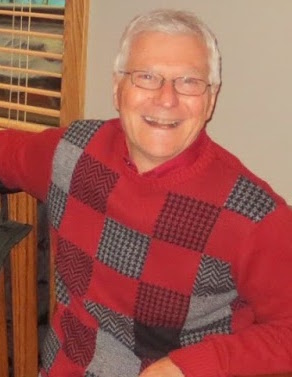
Tony Pedriana continues as the Chair of the Scholarship
Committee. In this capacity, he contacts
area high schools to make them aware of the annual scholarships available from
RFAreaREA to graduating seniors. He
provides them with the application information and forms, collects them, and
leads the review of applications with other volunteer members. Tony is a Milwaukee native who, with his
wife, moved to River Falls several years ago to be nearer his daughter and
grandchildren. He was an elementary
school principal in the Milwaukee public schools. He has also published a book on teaching
reading entitled Leaving Johnny
Behind: Overcoming Barriers to Literacy
and Reclaiming At-Risk Readers. He
is currently researching and writing another project. He also founded a local organization that
promotes early childhood literacy through activities and book giveaways, Jump
Start to Literacy.
The Membership Committee, chaired by Laura Zlogar, needs a few new
people to help with membership activities.
We need
· people to greet new members and to make them feel
welcome;
· people who are willing to write notes to people who
have been invited to our meetings as potential new members and who have attended
to let them know that they are welcome and to encourage them to join;
· people who will write and call potential new members
to invite them to meetings and to let them know what WREA is all about;
· people will help with membership drive activities.
If you are one of those
people, please let Roger or Laura know!
The Programming Committee will be chaired again by Ruth Wood. Bernie Brohaugh and Marylin Plansky will also
serve. If you have ideas for upcoming
programs, please let one of them know.
Liz Kreibich has agreed to
continue to serve as chair of the Sunshine
Committee. In this role, she sends
out cards to members who might be ailing and condolences to the families of
members who have died. We have many
current and former members who are in residential care homes in River Falls,
Spring Valley, and Ellsworth. If anyone
would like to help Liz out and perhaps volunteer to visit some of these folks,
let Liz know.
The Bylaws Committee will meet this year to revise the local unit’s
bylaws to be consistent with the new WREA bylaws. Bernie Brohaugh, Roger Hulne, and Marylin
Plansky will take on those duties.
Do we need one more
committee? WREA suggests that each unit have
an Educational Outreach Committee—a
group of people who will spearhead activities to support area educators. Part of our mission as a unit is to make
connections between retired and active educators. This committee would send encouraging
postcards to innovative teachers and principals who are engaged in creative
teaching and learning (and perhaps even identify those who deserve a financial
reward from our unit). The committee
would identify projects that would help area teachers and students (Collecting
school supplies, hats, gloves, or other needed items? Assembling gift bags at the start of the
school year for teachers? Distributing
WREA pamphlets to schools within our district for prospective retirees? Creating some sort of recognition for
educators for Teacher Appreciation Week, May 1-5, 2017?) Let Roger know if you would be interested in
joining/leading such a committee.

Notes from the
President
By Roger Hulne
I will be serving as
President this year. Bernie called and
asked if I would serve. I am in my
second year of retirement and have much to learn about our organization. I look
forward to working with you, while having some fun and interesting programs.
Let me tell you a little
about myself. I have been married for 44
years to Patricia; we have six children and four grandchildren. I served as Superintendent at Prescott from
2002-2015. I started as a teacher and
coach in North Dakota in 1973. One of my goals is for us to know each other
better through meetings and activities.
When WEA invited me to ride
the Union Bus to Madison during the turmoil of Act 10, I accompanied teachers
from my district as we joined the thousands of others demonstrating in support
of Wisconsin public education and teachers’ unions. I was there to stand up for education in our great
state even though no other school superintendents followed suit. I remain committed to education and the
teaching profession.
Several issues affecting
public education concern me. According
to Senator Vinehout, the last state budget directed more than $645 million of
state taxpayer funds for private and charter schools. Under current policy, private schools may
take state funds to subsidize students currently attending their schools and
have none of the testing requirements of public schools. While private schools
are a choice parents make, they should not receive funds at the expense of
public schools.
I hope to see you all at the
next meeting on November 10th.
CONSUMER SAFETY TIPS
FOR SENIORS
A Summary from the WREA
Convention
Sandy Chalmers of the
Wisconsin Department of Agriculture, Trade, and Consumer Protection provided
important information on how we can protect ourselves and our technology from
fraud.
She identified current trends
being reported to her department: identity
theft, imposter scams, and telephone calls violating the “do not call” list.
We are currently experiencing
a proliferation of telemarketing calls—from
government imposters claiming to be the IRS or Medicare, from supposed debt
collectors, from people claiming that you have won a prize or a sweepstakes
even if you never entered. All of this
has been made possible by new voiceover technology that has made it cheap to
call the U.S. from anywhere in the world.
This technology also manipulates caller ID to make it appear that these
calls are local when they could be coming from India, Russia, or elsewhere in
the world. New scam technology allows
the caller not to even leave a message (because it takes too much time). The U.S. government is in negotiations with
Google, Microsoft, and others to help mitigate the problem. Most phones—even relatively inexpensive
ones—have capabilities of blocking numbers.
Read your guidebook to see how it works.
Another favorite scam right
now is one claiming to be from a software technical
support person. The caller will
claim to be Microsoft Technical Support, for instance, and will tell you, “You
have a problem with your computer.” DO
NOT provide the caller with any personal information, user ID, passwords, or
credit card information. The scam
installs malicious software on your computer to capture keystrokes that can
then be used to access your banking, credit cards, and other confidential
information.
Some consumers pride
themselves in “outsmarting” the scammer in longer conversation. Consumer Protection tells us not to engage
with these people. Your phone number
will then be sold to other scammers as a possible live wire. When the call tells you to “Press # to speak
to someone or to remove your number from the call list,” don’t do it! You have just made yourself a mark by doing
so.
Ms. Chalmers provided a list
of common scams:
· Healthcare fraud/Medicare fraud. The caller will often say, “I just want to
verify the information on the back of your card”—which is your Social Security
number. Do not give out that
information.
· Discount “Lifeline” or prescription drugs. The caller will offer you a $19.95 discount
card, which is absolutely worthless.
· Anti-aging creams and lotions. Again, a scam to be avoided.
· Timeshare sales and discounts. The caller asks for upfront payment to sell
your Florida timeshare, for instance.
One consumer lost $100,000 in this scam.
· Business work-at-home scams. These require big investments from the
consumer that never result in any income generation.
· Charitable donations (many occurred after the Orlando
shootings, the Baton Rouge floods, Haiti hurricanes) or Go Fund Me pages. Do not respond ever to a phone call asking
for charitable contributions. If the
charity is legitimate, ask for its phone number or its webpage so that you can
investigate further. Go with well
recognized charities. Avoid pop-up
charities.
· Grandchild scam.
The caller claims to be your grandson or granddaughter in jail or in the
hospital. Or the caller could be a
person posing as a police officer or a doctor.
The caller asks for several thousand dollars to be wired
immediately. Because wire transfers
cannot be traced, the person cannot be identified and your money cannot be
retrieved. Calls often get more and more
threatening.
· Magazine subscriptions, dating services or a romantic
offer, transient crews offering roofing, driveway repair, or other home
repairs—all are scams!
What to do? Hang up on robocallers; spot imposters; talk
to someone before doing anything. Do not
trust Caller ID. Do not wire money. Don’t pay up front for any promise.
Further, monitor your bills
and financial statements to make sure that everything charged to you is
actually goods and services you have received.
Check your credit report periodically.
By law, you are allowed to check it 3 times per year. Use only annualcreditreport.com. Other services will cost you.
If your credit cards have
been stolen, you can freeze your credit security at the three agencies listed
on this website. Each freeze costs $10.
Other important tips: Don’t
carry your Medicare card with you in your wallet! Photocopy it, block out all the digits, and
show that. You will not be denied
service. If a hospital or doctor’s
office needs to see the original, you can bring it later. But don’t carry it around with you.
In creating online accounts
and passwords, don’t use your mother’s name, her birthplace, or yours as
passwords. These are usually security
questions.
Finally, report all frauds to
law enforcement so that patterns can be traced and perpetrators can be
arrested. A recent ring headed in
Wisconsin and working out of Canada was recently closed down. Another large outfit in India that had bilked
Americans out of millions of dollars has been shut down.
Consumer Protection contact numbers: (800) 422-7128, FAX (608) 224-4677, 2811
Agriculture Drive, P.O. Box 8911, Madison, WI 53708-8911, DATCPHotline@wisconsin.gov, datcp@wiscons

MINUTES FOR SEPTEMBER 13, 2016 MEETING
Submitted by Gail Possley,
Secretary
Bernie
Brohaugh opened the business meeting at 11:00 a.m.
We
welcomed three new members: Mary Foster
(UW-River Falls), Bonnie Jones-Witthuhn (Prescott SD), and Patricia Hulne
(educational consulting). We also
welcomed visitor Gretchen Krahn (St. Croix Central).
Laura
Zlogar shared notes from the WREA State Convention, which was held in Wisconsin
Rapids on Sept. 27-28, 2016.
There were two power point presentations about the pension fund. There
was also discussion regarding health insurance for the new retirees
between the ages of 55 & 65. Dues are due: $10 local and $50 state;
associate member dues are $5 local and $35 state.
Treasurer’s
report – is available in the newsletter.
Legislative
Chair’s report - With regard to the Wis. Retirement System and per The Milwaukee Journal/Sentinel in
SE Wis. retirement promises were made but no funds were set aside, which
supports claims that promises were either exaggerated or failed to
materialize with regard to Act 10. Here are more statistics regarding the
effect (or lack) of Act 10.
■ The number of public
school teachers in Wisconsin fell from 61,059 in 2008 to 59,512 in 2014. But
the decline began in 2009, two years before the passage of Act 10, and has
slowed since 2011. The number of teachers fell by about 2.2% in the first year
after Act 10 but has ticked up slightly since.
■ Act 10 was responsible
for a $150 per-pupil cut in district spending on salaries and a cut of up to
$600 on benefits, when compared with other states.
■ There was little
difference in the demographic makeup of Wisconsin's teaching workforce in the
years before and after the passage of Act 10, when compared with other states.
The average age, for example, fell from about 44 to 43. And it remains
predominantly white and female. However, there was a 0.3% increase in Hispanic
teachers and identical decline in those who identified as white.
■ There is no evidence to
suggest that Act 10 significantly increased student-teacher ratios, when
compared with other states. However, there is evidence to suggest it reduced
the ratio of students to administrators.
■ The report found no
statistically significant difference in the effect of Act 10 on schools in
urban, rural or suburban communities.
Committee
reports were presented which included mentioning open enrollment for
health coverage; discussion regarding the WREA Scholarships with the decision
to continue to offer scholarships to education majors; suggestions for future
programs; proposing monetary donations instead of baked items for the
spring bake sale; special interest activities; suggestions for
volunteering. The Sunshine Committee will once again be chaired by Liz
Kreibich. We will need to find someone
to replace Don Leake to collect volunteer hours.
New
Officers were installed and they were Roger Hulne (President), Ruth Wood (Vice
President), Gail Possley (Secretary), Laura Zlogar (Treasurer), and Bonnie
Jones-Witthuhn (Legislative Chairperson).
The
business meeting ended at 11:30 a.m.
READERS’ THEATER
For
the members’ enjoyment an original play, Celebration Of The Spirit, written by Bernie Brohaugh, was
presented. Cast members included the author, Ruth Wood, Gail
Possley, Bill Montgomery, Bonnie Jones-Witthuhn, Dave Peters, and Nancy
Peters.


LEGISLATIVE REPORT
In a time of auto correct
spelling and auto self-drive cars we might think our pension is also on “auto
correct,” if there is a problem. It is
not. In a time of tight budgets and the
needs of state agencies, our pension is a pot of gold at the end of the state
budget rainbow of needs. Some might
assume what a high school teaching colleague asked, “They can’t take away our
unions, can they?” and they did. Act 10
forever changed public unions in Wisconsin in spite of our many trips to
Madison to protest. It happened. Our vision of a secure pension future depends
on all of us being the drivers of decisions about the Wisconsin Retirement
System. We are secure, now, but we must
always be alert.
I am also guilty of not
paying attention, so my breadth of knowledge is limited in scope but hopefully
will grow over the coming months.
Gleanings for this month:
· Wisconsin Retirement System is a fully funded pension
· WRS is the 9th largest U.S. public pension
fund
· WRS is to be “free of political management”
· Wisconsin state budget for 2017-2019 is forming
· Walker instructed zero increase for all agency budgets
· Walker has also proposed at least $850 million dollars
in some new projects
· We must be alert--always
NEWS HEADLINES OF NOTE
By Laura Zlogar
The test scores of Wisconsin public school students—fourth,
eighth, and twelfth grades—in language arts, math, science, and social science
have been published this month. These
results are from the National Assessment of Educational Progress or NAEP test. An interactive map that shows the scores of
every district in the state can be found at
http://www.wisinfo.com/usat/student_scores/.
One disturbing result shown in these scores is that Wisconsin has the
worst black-white science achievement gap standing in the country (27 Oct. 2016
Milwaukee Journal Sentinel).
--The UW System is reporting a $2 billion backlog in needed
repairs to campus buildings due to the years of budget cuts. Chancellors are asking the Board of Regents
to allow each campus more autonomy in managing construction and repair projects
(WXOW.com 26 Oct. 2016).
--Wisconsin’s infringement on voting rights is a topic of
national discussion. Ari Berman, author
of Give Us the Ballot: The Modern
Struggle for Voting Rights in America and contributor to The Nation has been
following events in our state—from the woman in Eau Claire who has been voting
all of her life since age 18 who now cannot vote because her birth records from
India cannot be produced to DMV employees who are turning away voters applying
for Voter IDs despite having proper documentation. He also reports that the Green Bay City Clerk
opposed an early-voting site at UW-Green Bay because, as she wrote, “I have
heard it said that students lean more toward the democrats…. I have spoken with
our Chief of Staff and others at City Hall and they agree that budget-wise this
isn’t going to happen. Do I have an argument about it being more of a benefit
to the democrats?”
(http://billmoyers.com/story/city-clerk-opposed-early-voting-site-uw-green-bay-students-lean-toward-democrats/)
--According to Wisconsin Public Radio, Milwaukee’s teen
birth rate has dropped to a historic low—65% since 2006, a steeper decline than
the national 54%. The lower birth rate
translates into fewer school dropouts.
WPR reports that “The decrease in birth rate can be attributed to
increased education, a public awareness strategy aimed at teaching teens about
how becoming pregnant can negatively affect youth and encouraging parents to
talk to their children about sex and pregnancy.” http://www.wpr.org/milwaukees-teen-birth-rate-drops-historic-low
HEALTH COMMITTEE
REPORT
It has
been revealed that 203,000 Wisconsinites have health insurance plans not up to
the ACA standards. Most states have banned these, but not in Wisconsin. This
practice hurts the ACA because of the loss of these customers.
The
Benefit Services Group says that if Wisconsin goes with self-funding in their
state health insurance, it would be a mistake. Self-funding would also create
disruption and instability in the market and increase costs for the state.
When it
comes to the health of its residents, the state of Minnesota is faring better
than Wisconsin, according to a study in the latest issue of WMJ. On average,
Minnesota has lower premature death rates, better self-reported quality of
life, and better birth outcomes.
DECEMBER’S HOLIDAY PROGRAM
As usual,
we will have a holiday program at our regular meeting on December 8th. We are asking that you think about your own
holiday memories and be ready to share them with the group. The coldest Christmas you remember? The craziest?
The most touching? Are there
holiday rituals that you learned as a child from a parent or grandparent that
you are passing down to your own children and grandchildren? Are there foods that bring you right back to
a moment in time? We want to hear your
stories!
MEMBERSHIP RENEWAL REMINDER—One more time!
It is once again
time to renew your membership to WREA and to RFArea REA. Membership runs from October to September of
every year. Annual dues are $50 for WREA
membership and $10 for RFArea REA membership (for people who receive WRS/ETF
pensions). For associate members
(spouses, friends of Wisconsin education), dues are $35 for WREA and $5 for our
local unit. Some of you have already
renewed your membership online or for multiple years but have not paid local
dues. Some still need to pay both state
and local dues. If you aren’t sure, you
can contact Laura Zlogar at laura.w.zlogar@gmail.com or 715-425-0468.


